
Medical Apartheid (Part 2): The Foundation For Our Post-Colonized Healthcare System


To continue the conversation from our September article on medical apartheid, it’s clear that the story doesn’t end with history. The legacies of exploitation and neglect we traced are still alive today, shaping the way Black women experience healthcare in America. Malcolm X once said, “The most disrespected person in America is the Black woman. The most unprotected person in America is the Black woman. The most neglected person in America is the Black woman.” (1962). Over half a century later, those words still ring true. Black women continue to carry the weight of a healthcare system that was never designed to protect us, and in many ways, was built to exploit us.
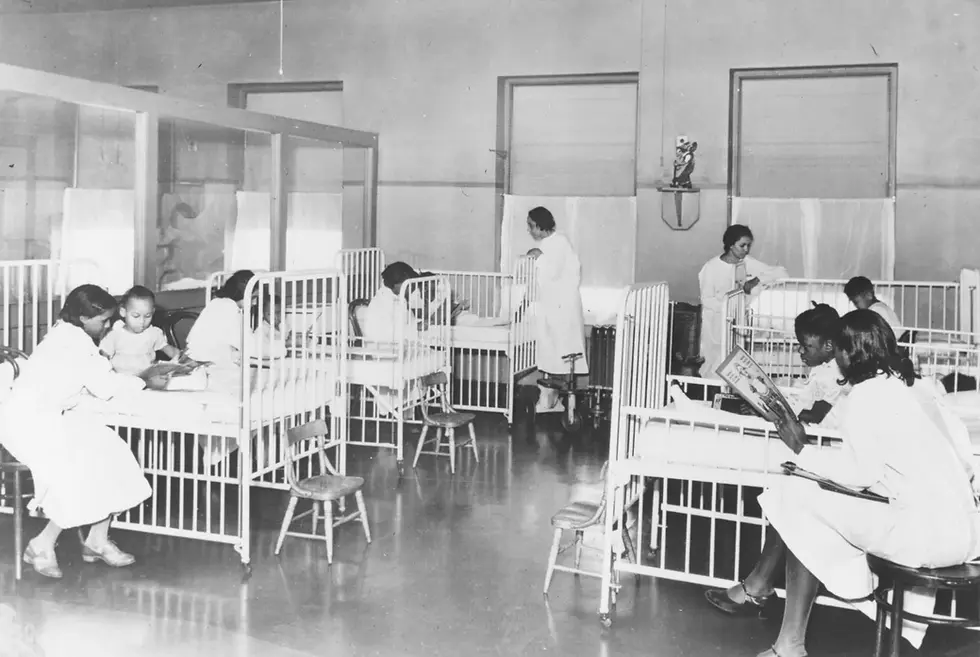
During our interview, Dr. Erica Steele explained that the reality is that our post-colonized healthcare system doesn’t simply “fail” Black women. It was structured within a capitalist framework where those at the top profit from the pain, labor, and neglect of those at the bottom. Healthcare has become a commodity, and when access depends on wealth, Black women, who are consistently underpaid compared to white men and women, are disproportionately locked out of quality treatment. This isn’t a glitch in the system; it’s the system functioning as intended.
Despite decades of activism, racism remains embedded in every layer of healthcare. The recent wave of corporations dismantling their diversity, equity, and inclusion programs is just one example of how fragile progress really is. According to AJMC, even federal agencies have quietly stepped back from commitments that were once seen as vital. Earlier this year, the FDA removed draft guidance that encouraged diversity in clinical trials, guidelines that would have required action plans and inclusion of underrepresented populations (2024). With the removal of this guidance, the ripple effects show up in decreased research funding, access to resources, and representation in clinical studies. It’s another reminder that the very systems meant to protect progress are just as easy to erase.

The pervasive and generational neglect extends beyond policy into what is known as institutional trauma. For generations, Black women have carried the memory of medical exploitation. Dr. Steele expanded on this reality and brought up the horrors of Black women being subjected to forced sterilizations, unethical experiments, and repeated dismissal of our pain. That legacy shapes not only how we continue to be treated but also how we approach the healthcare system itself. Stress, mistrust, and hypervigilance all become part of the trauma cycle, producing worse outcomes and perpetuating disparities. The trauma is not just personal, it is systemic, inherited, and reinforced at every turn.
Legislation and unilateral policies only deepen this reality. In the current political climate, advancing agendas are once again placing Black women at risk. Abortion bans, restrictions on reproductive health services, and cuts to social support programs strip away protections and reinforce an antiquated hierarchy where Black women are expendable. Policies are never neutral, they either protect or they endanger. Right now, they are continuing to endanger us.
The healthcare system isn't broken—it was designed this way. We must stop trying to fix a defective system and instead rebuild one that was never created for equity. Black women deserve protection, respect, and care, not as an afterthought but as a foundation. Until then, the words of Malcolm X will remain a painful reality, and the fight to reimagine healthcare will remain as urgent as ever.
Still, the story doesn’t end with oppression. Black women have always found ways to resist, to heal, and to create care outside of systems that were never meant for us. From the legacy of Black midwives protecting birth justice to community organizers building mutual aid networks, our survival has never been passive—it has been active, intentional, and deeply rooted in love. These acts of resistance are not just about filling gaps, they are about rewriting what healthcare can and should be when it is rooted in dignity rather than profit.
At the same time, Black women are leading movements in research, advocacy, and community health that center our voices and lived experiences. Even as policy protections are stripped away, the push for intersectional solutions grows louder. The fight is not only to be seen in data and clinical trials but to transform the very structures that continue to erase us. This work is urgent, it is ongoing, and it reminds us that while the system was built to exploit us, our power lies in building something entirely different, something that cannot be dismantled as easily as it is dismissed.
Dr. Erica Steele’s expertise and perspective is essential to shedding light on how systemic racism continues to shape healthcare for Black women. Learning from her helps broaden understanding for those who, like me, are still coming to terms with the history of where these issues stemmed from. Organizations like The Ruth Collective are essential in this work; raising awareness, advocating for equitable care, and supporting those most affected by lack of access to essential care. In times like these, when the systems meant to protect us continue to fail, the TRC’s work ensures that the health, dignity, and well-being of Black women remain a priority.

To learn more about Dr. Erica Steele:
Sources
Lackey A. The fallacy of the Strong Black Woman, Charlotte Mecklenburg Library. www.cmlibrary.org. Published May 12, 2021. https://www.cmlibrary.org/blog/fallacy-strong-black-woman
Steele, Erica, DNM. Personal Interview. (August 8, 2025)
Grossi G. FDA Quietly Removes Draft Guidance on Diversity in Clinical Trials Following Executive Order on DEI. AJMC. Published January 31, 2025. https://www.ajmc.com/view/fda-quietly-removes-draft-guidance-on-diversity-in-clinical-trials-following-executive-order-on-dei

Comments